
EPC Pipeline Construction in Nigeria: The Complete 2026 Guide
Nigeria holds Africa’s largest natural gas reserves — 215.19 trillion cubic feet as of January 2026 — yet most of that resource still can’t reach a customer without new pipeline capacity. That gap is why EPC pipeline construction in Nigeria has become one of the country’s most active infrastructure sectors, spanning everything from the 614-kilometre Ajaokuta-Kaduna-Kano (AKK) gas trunkline to the proposed 6,900-kilometre Nigeria-Morocco gas corridor.
This guide covers what “EPC” actually means in a pipeline context, how Nigeria’s regulatory system works, which projects and contractors are shaping the market right now, the real challenges contractors face on the ground, and what to look for when evaluating an EPC partner. It’s written for project sponsors, investors, engineering teams, and contractors trying to understand Nigeria’s EPC pipeline construction market rather than just its headlines.
Last updated: July 2026
Quick facts: Nigeria’s pipeline sector at a glance
| Metric | Figure |
|---|---|
| Proven natural gas reserves (Jan 2026) | 215.19 trillion cubic feet — largest in Africa |
| Investment needed for planned gas pipeline network | ~$22 billion (NNPC Gas Master Plan 2026) |
| AKK pipeline | 614 km, 40-inch diameter, ~$2.8 billion, >90% complete |
| Nigeria-Morocco (African Atlantic) gas pipeline | ~6,900 km, ~$25 billion, spans 13 countries |
| Trans-Saharan Gas Pipeline | 4,128 km, $10–13 billion, construction underway |
| Dangote Refinery subsea pipeline network | 1,100 km — the largest subsea pipeline system in the world |
| Primary midstream regulator | NMDPRA (Nigerian Midstream and Downstream Petroleum Regulatory Authority) |
| Local content law | Nigerian Oil and Gas Industry Content Development (NOGICD) Act, 2010 |
What “EPC” Means in Pipeline Construction
EPC stands for Engineering, Procurement, and Construction — a contract model where a single contractor takes full responsibility for designing a pipeline, sourcing the materials and equipment, and building it, typically for a fixed price and schedule. The client deals with one accountable party instead of coordinating separate designers, suppliers, and builders.
In Nigeria’s bid documentation, you’ll also see related contract categories: EPCC (adds Commissioning), EPCM (Engineering, Procurement, Construction Management, where the contractor manages the work but the client holds the individual contracts), and T&I (Testing and Installation). Nestoil, for example, describes itself as Nigeria’s largest indigenous EPCC contractor rather than a pure EPC firm — the extra “C” reflects that it also commissions the systems it builds. NCDMB’s own contracting templates list EPC, EPCM, T&I, I&C, CC, and O&M as distinct, recognised categories that operators must specify when tendering.
The three core phases work like this:
- Engineering — route selection, geotechnical and environmental surveys, detailed pipeline design (wall thickness, coating, cathodic protection), and the permitting package submitted to regulators.
- Procurement — sourcing line pipe, valves, pumping/compressor equipment, and materials, while satisfying Nigerian Content requirements on local sourcing and fabrication.
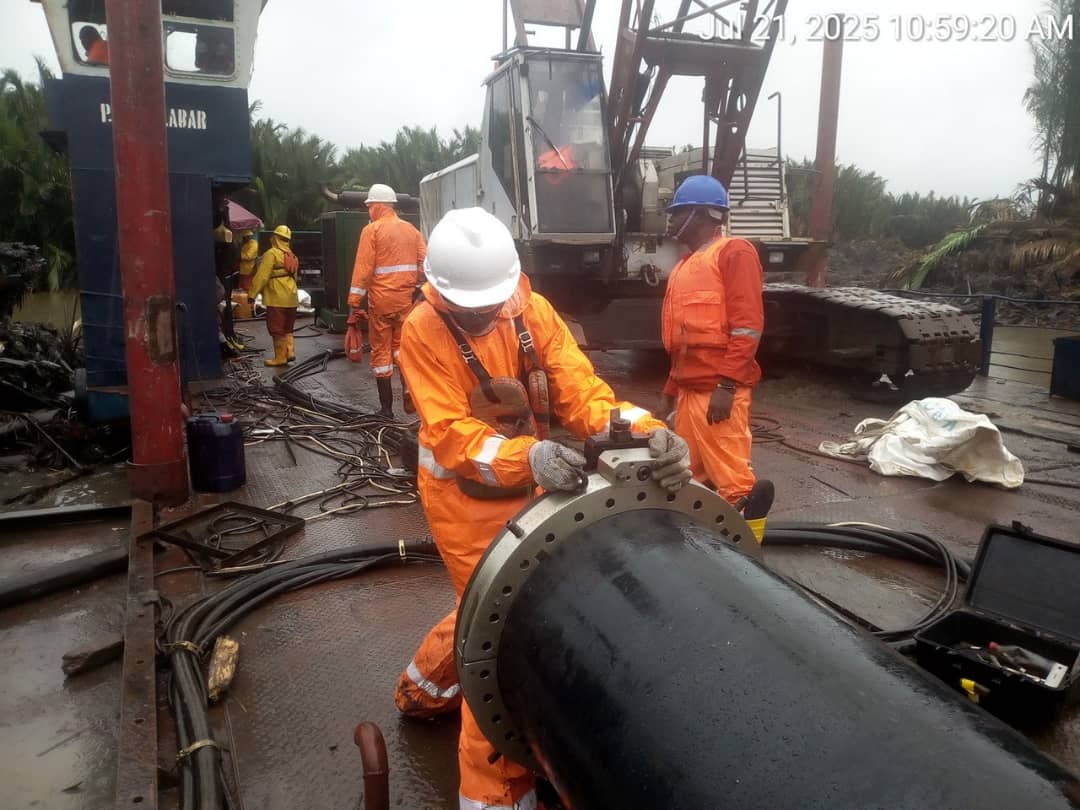
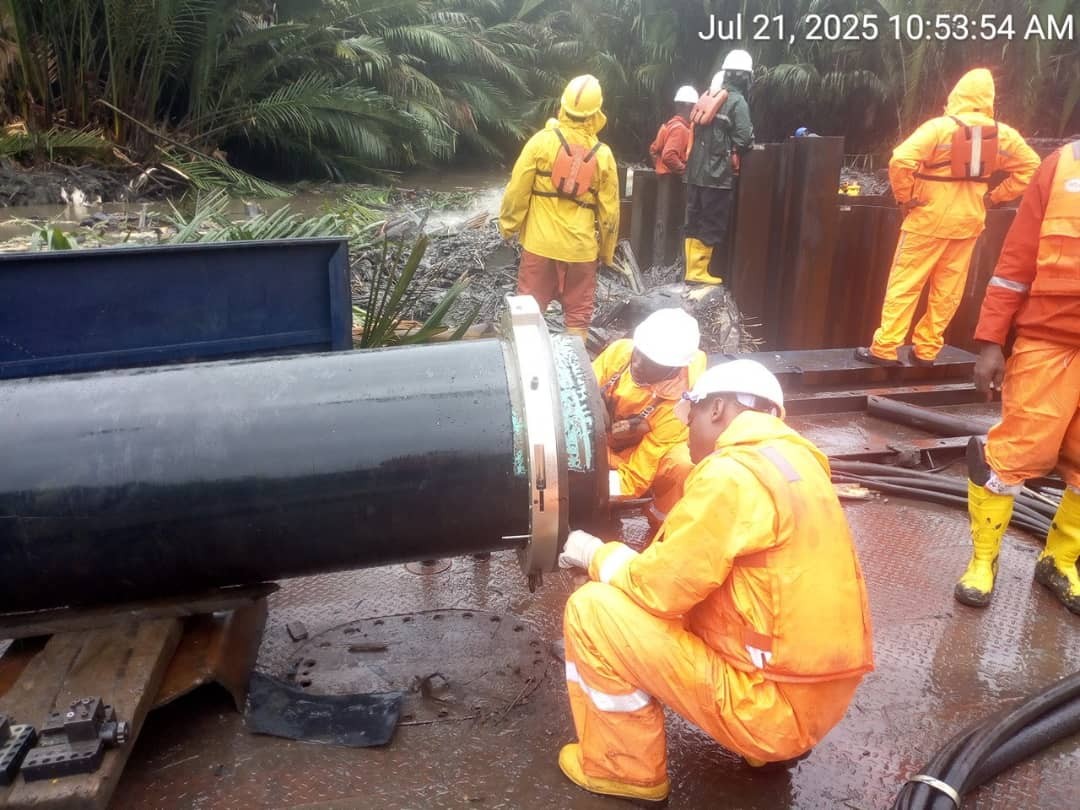
- Construction — right-of-way clearing, trenching, welding, river and road crossings (often via horizontal directional drilling), coating, backfill, hydrostatic testing, and pre-commissioning.
Nigeria’s Pipeline Landscape in 2026: Why This Market Exists
Nigeria produces far less gas than its reserves would suggest is possible, largely because pipeline infrastructure hasn’t kept pace with the resource base. The country still ranks as the world’s seventh-largest gas-flaring nation, burning off gas that has no route to market. NNPC Ltd.’s Gas Master Plan 2026, launched on 30 January 2026 at NNPC Towers in Abuja, was built specifically to close that gap.
The plan identifies 23 gas hubs nationally, with seven “Super Seven” hubs — including Gbaran-Soku-Obagi-OBOB, Escravos, and Assa North — holding roughly 60% of Nigeria’s proven-plus-probable gas reserves. It sets a production target of 10 billion cubic feet per day by 2027, rising to 12 Bcf/d by 2030, and identifies 30 priority infrastructure projects to be completed within three years, with another 30 over the following decade. Delivering that pipeline buildout is expected to require roughly $22 billion in fresh investment.
This is the demand driver behind nearly every EPC pipeline tender in the country right now: gas that needs to move from producing fields in the Niger Delta to industrial users, power plants, and export terminals hundreds of kilometres away.
Key Regulatory Bodies and the Legal Framework
Nigeria’s oil and gas sector — including all pipeline construction and operation — is governed by the Petroleum Industry Act (PIA) 2021, which replaced the old Department of Petroleum Resources with two specialised regulators.
| Regulator | Value chain segment | Role in pipeline EPC |
|---|---|---|
| NUPRC (Nigerian Upstream Petroleum Regulatory Commission) | Upstream (exploration & production) | Regulates gathering lines and pipelines directly tied to upstream production; grants petroleum licences and leases |
| NMDPRA (Nigerian Midstream and Downstream Petroleum Regulatory Authority) | Midstream & downstream | Issues the gas transportation pipeline licence; regulates transportation, storage, and pipeline safety standards |
| NCDMB (Nigerian Content Development and Monitoring Board) | Cross-cutting | Enforces local content compliance on every contract |
| Federal Ministry of Petroleum Resources | Policy | Sets overarching sector policy; grants/revokes licences on regulatory recommendation |
A few practical points every EPC bidder needs to know:
- Licensing overlap is common but has been clarified. Because pipelines often start as upstream-enabling infrastructure and later become shared or market-facing assets, jurisdiction between NUPRC and NMDPRA can blur. A 2023 presidential directive placed technical and commercial regulation of integrated upstream-midstream systems under NUPRC, while NMDPRA retains authority over standalone midstream transportation.
- Right-of-way is set by statute. Under the Oil Pipelines Act, a licence entitles the holder to use a strip of land up to 200 feet wide along the approved route; anything beyond that requires the landowner’s separate consent.
- Host communities get a legal stake. The PIA requires operators to establish a Host Community Development Trust and contribute 3% of the prior year’s operating expenditure to it — a material line item for any pipeline project running through populated areas.
- Local content isn’t optional. Every project must have an NCDMB-approved Nigerian Content Plan before work starts, and companies register on the NOGIC Joint Qualification System (JQS) — Nigeria’s official contractor pre-qualification database — to be eligible to bid at all. Since a 2024 presidential directive, NCDMB has been explicitly barred from approving plans built around “intermediary” contractors with no real capacity to execute — a direct response to briefcase companies winning contracts on paper alone.
Typical local content thresholds contractors should plan around: roughly 50% of equipment procurement favouring Nigerian-made goods where available, up to 95% Nigerian staffing in junior and intermediate roles, a cap of around 5% on expatriates in management, and a 1% contribution of contract value to the Nigerian Content Development Fund.
Major EPC Pipeline Projects Shaping Nigeria Right Now
AKK — Ajaokuta-Kaduna-Kano Gas Pipeline
The AKK is Nigeria’s flagship gas pipeline project and Phase 1 of the wider Trans-Nigeria Gas Pipeline system. It’s a 614-kilometre, 40-inch line running from Ajaokuta in Kogi State through Abuja and Kaduna to Kano, designed to carry more than 2 billion standard cubic feet of gas per day to power plants, fertiliser producers, and industrial parks in the north. Valued at roughly $2.8 billion and first conceived in 2008, construction was flagged off in June 2020 and has faced repeated financing-driven delays since.
Oilserv Ltd. — the indigenous contractor built by engineer Emeka Okwuosa — is handling a major section of the route, including the technically demanding River Niger crossing, completed using horizontal directional drilling. China Petroleum Pipeline Engineering Company (CPP) has delivered other sections. By mid-2026, NNPC Ltd. reported the mainline welding complete, with the project over 90% finished and commissioning targeted within the year.
OB3 — Obiafu-Obrikom-Oben Pipeline
Running alongside AKK in NNPC’s reporting, the OB3 pipeline is part of the same gas-transmission expansion connecting eastern gas fields toward national demand centres, and was also reported over 90% complete in 2026.
Trans-Saharan Gas Pipeline (TSGP)
A far larger and longer-dated undertaking: 4,128 kilometres running from Warri in Nigeria, north through Niger, to Algeria’s Hassi R’Mel hub, where it would connect into existing pipelines already supplying Europe. Estimated at $10–13 billion, the project has existed on paper since the 1970s and was formalised through a 2009 intergovernmental agreement between Nigeria, Niger, and Algeria. Construction of the Algerian section began in June 2026, with Niger’s section expected to start in early 2027.
Nigeria-Morocco Gas Pipeline / African Atlantic Gas Pipeline (AAGP)
The most ambitious of Nigeria’s export-oriented pipeline projects: an approximately 6,900-kilometre hybrid offshore-onshore line intended to move up to 30 billion cubic metres of gas annually along the West African coast, through 13 countries, to Morocco and onward into the European market. Roughly half the capacity is earmarked for domestic West African markets along the route. Feasibility and front-end engineering design (FEED) work is complete, and Nigeria and Morocco are targeting an intergovernmental agreement in Q4 2026 — though industry analysts place realistic first gas somewhere between 2031 and 2033, given the project’s scale and the number of governments involved.
Case study: Dangote Refinery’s pipeline decision
The Dangote Petroleum Refinery in Lekki is supplied by the largest subsea pipeline infrastructure in the world — 1,100 kilometres of pipeline (including two 48-inch subsea crude lines) capable of handling 3 billion standard cubic feet of gas per day, feeding a refinery that reached its full 650,000-barrel-per-day nameplate capacity in February 2026. Yet for distributing refined products within Nigeria, the Dangote Group deliberately chose not to build a domestic pipeline network, opting instead for CNG-powered trucking — a decision explicitly attributed to pipeline security risk. It’s a useful real-world illustration of how seriously security considerations factor into EPC decision-making in Nigeria, even for the country’s best-capitalised private infrastructure project.
[Image suggestion: aerial or satellite-style graphic showing the AKK route from Ajaokuta to Kano, alt text: “AKK gas pipeline route map Nigeria”]
The EPC Pipeline Construction Process, Step by Step
| Phase | What happens | Nigeria-specific considerations |
|---|---|---|
| 1. Feasibility & FEED | Route studies, reserve/demand analysis, front-end engineering design | Often government- or NNPC-sponsored for strategic trunklines |
| 2. Licensing & permitting | NMDPRA gas transportation pipeline licence, environmental impact assessment, state town-planning approvals | Overlapping NUPRC/NMDPRA jurisdiction can extend timelines |
| 3. Right-of-way & land acquisition | Survey, community consultation, compensation, HCDT setup | 200-ft statutory corridor under the Oil Pipelines Act; community relations are often the critical path |
| 4. Detailed engineering | Final route, stress and geotechnical analysis, material specification | Must reference NNPC and international pipeline codes (see standards section) |
| 5. Procurement & fabrication | Line pipe, valves, coatings, compressor/pump packages | NCDMB-approved Nigerian Content Plan governs local sourcing quotas |
| 6. Construction | Clearing, trenching, welding, road/river crossings, coating, backfill | Terrain varies from Niger Delta mangrove swamp to arid savannah; river crossings typically use horizontal directional drilling |
| 7. Testing & pre-commissioning | Hydrostatic testing, cleaning, drying | Independent of construction contractor in some project structures |
| 8. Commissioning & handover | Gas-in, performance testing, handover to operator | May be a separate “C” scope (EPCC) or a distinct O&M contract |
Who Builds Nigeria’s Pipelines: Leading EPC Contractors
Nigeria’s EPC pipeline market is a mix of large indigenous players (built specifically to meet local content requirements) and international majors that have operated in-country for decades.
| Contractor | Type | Notable Nigerian pipeline-relevant work |
|---|---|---|
| Oilserv Ltd. | Indigenous | Lead contractor on major AKK sections, including the River Niger HDD crossing |
| Nestoil Plc | Indigenous | Nigeria’s largest indigenous EPCC firm; pipeline construction, repair, dredging, and river-crossing works |
| Julius Berger Nigeria Plc | International (long-established local presence) | Civil and EPC works across oil and gas installations |
| Saipem Contracting Nigeria Ltd. | International | 50+ years in Nigeria; NLNG Bonny Island trains, Egina and Bonga North EPCI |
| China Petroleum Pipeline Engineering Co. (CPP) | International | AKK pipeline sections |
| Daewoo E&C Nigeria | International | EPC across upstream, petrochemical, and pipeline scopes |
| RCC (Reynolds Construction Company) | International (Nigeria presence since 1956) | Broad infrastructure and pipeline-adjacent civil works |
| Desicon | Indigenous | Pipeline engineering and refinery-related construction |
When shortlisting, verify current NOGIC JQS registration and NCDMB certification directly — local content compliance status changes, and Nigerian regulators have actively been removing “intermediary” entities from qualification lists since the 2024 directive.
The Biggest Challenges in Nigerian Pipeline EPC Delivery
Security and pipeline vandalism. Crude theft and vandalism pushed Nigerian output down to roughly 900,000 barrels per day in 2022 before a private surveillance contract with Tantita Security Services — led by Government Ekpemupolo (“Tompolo”) and working alongside NNPC’s Industry Wide Security Architecture — helped drive a recovery to around 1.5–1.8 million barrels per day by 2026. NNPC still logged 24 vandalism incidents across 2025–2026, and operators report that vandals now use CCTV and coordinated command structures, meaning security provisioning is now a standing line item in most pipeline EPC budgets rather than a contingency.
Right-of-way and community relations. With a legal 200-foot corridor to negotiate and a 3% host-community levy in place, community engagement isn’t a soft skill on Nigerian pipeline projects — it’s a scheduling variable that can stall a project as easily as a financing gap can.
Financing and foreign exchange exposure. Most pipeline steel, valves, and specialist equipment are dollar-denominated, while much of the local cost base is in naira, exposing multi-year EPC contracts to currency risk. The AKK’s own history — a project first conceived in 2008 that didn’t reach substantial completion until 2026 — illustrates how funding gaps, not engineering complexity, have historically been the main driver of Nigerian pipeline delays.
Local content compliance complexity. Meeting NCDMB’s thresholds on workforce, procurement, and fabrication requires early planning; contractors that treat it as a late-stage compliance exercise routinely lose time at the tender and NCP-approval stage.
Terrain diversity. A single national gas grid has to cross Niger Delta mangrove swamp, savannah, and major rivers — the AKK’s River Niger crossing alone required specialised horizontal directional drilling to avoid disturbing the riverbed.
Regulatory overlap. Though a 2023 presidential directive clarified much of the NUPRC/NMDPRA jurisdictional overlap on integrated systems, contractors working on projects that touch both upstream and midstream infrastructure should confirm which regulator holds primary oversight before finalising a project schedule.
Where the Opportunity Is: Growth Drivers Through 2030
The demand side of this market is not in question — it’s execution capacity that’s the constraint. Key growth drivers over the next few years include:
- The Gas Master Plan 2026’s 60-project pipeline, targeting 10 Bcf/d production by 2027 and 12 Bcf/d by 2030, with an “integrated gas hub” model coordinating 23 gas clusters.
- Industrial gas demand in the north, where AKK is expected to feed fertiliser, petrochemical, and power projects in Kaduna and Kano once fully commissioned.
- Export-corridor pipelines (Trans-Saharan and the Nigeria-Morocco/AAGP line), which — even on a 2031+ delivery horizon — represent tens of billions of dollars in EPC scope over the coming decade.
- Gas-to-power expansion, still constrained by tariff and liquidity issues in Nigeria’s power sector, but repeatedly flagged by NUPRC and NMDPRA as a priority coordination area.
- Decade of Gas policy continuity, which frames gas — and the pipeline infrastructure to move it — as Nigeria’s primary energy-transition fuel through 2030 and beyond.
How to Choose an EPC Pipeline Contractor in Nigeria
- Verify NOGIC JQS registration and NCDMB Nigerian Content certification directly — don’t rely on a contractor’s self-reported status, particularly given the 2024 crackdown on intermediary entities.
- Check HSE and quality certifications — ISO 9001 (quality management), ISO 14001 (environmental management), and ISO 45001 (occupational health and safety) are the baseline expectations for serious bidders.
- Ask for named, verifiable project references on Nigerian pipeline work specifically — regional experience elsewhere in Africa or the Middle East doesn’t substitute for familiarity with Niger Delta terrain, Nigerian permitting timelines, and local community engagement norms.
- Assess financial strength and bonding capacity relative to project size — multi-year pipeline EPC contracts require a contractor that can absorb FX volatility and payment-timing risk without stalling the schedule.
- Evaluate the security and community-engagement plan as a deliverable, not an afterthought — given how central this has become to Nigerian pipeline delivery, ask contractors to show their approach explicitly.
- Confirm technical capability for the specific route challenges involved — river crossings, swamp terrain, or long-distance trunklines each favour different contractor track records (horizontal directional drilling experience, marine/dredging capability, and so on).
Standards and Specifications Governing Nigerian Pipeline Projects
Nigerian pipeline EPC work is typically specified against a combination of international and national codes:
- ASME B31.4 (liquid pipeline transportation systems) and ASME B31.8 (gas transmission and distribution systems)
- API 1104 (welding of pipelines and related facilities)
- ISO 9001 / 14001 / 45001 for quality, environmental, and safety management systems
- NMDPRA and NNPC technical regulations and specifications, which govern licensing, integrity management, and operational standards specific to the Nigerian midstream
What Drives the Cost of a Pipeline EPC Project in Nigeria
Actual project costs vary too widely by scope to quote a single figure responsibly, but the main cost drivers on Nigerian pipeline projects are consistent:
- Diameter, length, and pipe-grade specification
- Terrain — swamp, river crossings, and forested corridors cost meaningfully more to clear and build through than open savannah
- Right-of-way compensation and host-community obligations, including the statutory 3% HCDT contribution
- Security provisioning, now a standard budget line rather than an exception
- Foreign exchange exposure on imported line pipe, valves, and specialist equipment
- Local content investment in training, fabrication capacity, and R&D commitments required under the Nigerian Content Plan
- Regulatory and permitting timelines, which can extend project duration (and financing cost) even when construction itself proceeds smoothly
Frequently Asked Questions
EPC stands for Engineering, Procurement, and Construction — a single-contractor model covering pipeline design, materials sourcing, and physical construction under one accountable contract, typically for a fixed price and schedule.
The Nigerian Midstream and Downstream Petroleum Regulatory Authority (NMDPRA) issues gas transportation pipeline licences and regulates midstream pipeline operations, while NUPRC oversees pipelines directly tied to upstream production, under the framework of the Petroleum Industry Act 2021.
Under EPC, the contractor holds full responsibility (and typically the financial risk) for design, procurement, and construction. Under EPCM, the contractor manages those same activities on the client’s behalf, but the client holds the individual supplier and construction contracts directly.
It depends heavily on financing and right-of-way negotiation, not just engineering. The AKK pipeline, for example, was conceived in 2008 and didn’t reach substantial completion until 2026 — a reminder that funding continuity and community/security factors typically shape Nigerian pipeline timelines more than technical build time does.
By length and cost, the proposed Nigeria-Morocco (African Atlantic) Gas Pipeline is the largest, at roughly 6,900 kilometres and an estimated $25 billion, though it remains in the agreement and early construction-phase stage. By current completion status, the 614-kilometre AKK pipeline is Nigeria’s most advanced major trunkline project.
Yes. Every project requires an NCDMB-approved Nigerian Content Plan before work begins, covering workforce, procurement, and fabrication targets, regardless of whether the contractor is Nigerian or international.
Key Takeaways
Nigeria’s EPC pipeline construction market sits at the intersection of enormous resource potential — 215 trillion-plus cubic feet of gas reserves — and a genuinely difficult delivery environment shaped by security risk, financing cycles, and a detailed local content regime. Contractors and project sponsors that treat security planning, community engagement, and NCDMB compliance as core project management disciplines (rather than compliance afterthoughts) are the ones actually completing projects like AKK and OB3 in 2026, while the export-scale pipelines — Trans-Saharan and the Nigeria-Morocco corridor — represent the next decade’s opportunity.
Our Services
Torch Energy Services delivers comprehensive Engineering, Procurement, and Construction (EPC) solutions to the oil & gas, power, and allied industries. Our expertise spans the complete project lifecycle—from concept and engineering to procurement, construction, installation, commissioning, and long-term maintenance.
Our core service offerings include:
- Engineering Design & Project Management
- Procurement & Supply Chain Solutions
- Pipeline Construction & Installation
- Pipeline Maintenance & Integrity Management
- Corrosion Prevention & Cathodic Protection
- Underwater Pipeline Leak Detection & Repair
- Asset Integrity Management
- Industrial Construction & Infrastructure Development
- Operation & Maintenance Services
- Technical Consultancy for Energy and Industrial Projects
Project Portfolio
With over 15 years of industry experience, Torch Energy Services has successfully delivered more than 215 projects across Nigeria and West Africa. Our portfolio includes large-scale gas transmission pipelines, pipeline rehabilitation, leak repair, hydrotesting, intelligent pigging, cathodic protection systems, and EPC projects for leading energy companies.
Notable project highlights include:
- Construction of the 36″ x 20 km Lekki Gas Pipeline Project
- Engineering, Procurement & Construction of multiple gas pipeline networks
- Pipeline sectional replacement and rehabilitation projects
- Online pipeline leak repairs for critical gas transmission infrastructure
- Hydrotesting and integrity testing of major river-crossing pipelines
- Cathodic protection installation and evaluation projects
- Industrial pipeline construction for manufacturing and petrochemical facilities
Our clients include leading organizations across the energy sector such as Nigerian Gas Company (NGC), Seplat Energy, Oando, AGIP, Notore Chemical Industries, WAPCo, Emerson, and several major EPC contractors, reflecting our commitment to delivering safe, reliable, and high-quality engineering solutions.
Why Choose Torch Energy Services
- Proven EPC expertise in oil, gas, and power infrastructure
- Experienced team of highly qualified engineers and technical professionals
- Strong commitment to Health, Safety, Environment (HSE), and Quality
- Timely project delivery with world-class engineering standards
- Innovative, cost-effective, and sustainable project solutions
- Trusted by leading energy companies throughout Nigeria and beyond
Contact Us
Whether you require engineering support, pipeline construction, maintenance services, or a complete EPC solution, Torch Energy Services is ready to deliver exceptional results.
Get in touch today to discuss your project requirements and discover how our expertise can help drive your next energy infrastructure project to success.